

Homes are evolving faster than ever, blending style, technology, and functionality into spaces that work smarter—not harder. If you’re searching for practical ways to upgrade your home with modern design trends, smart living solutions, and innovative decor ideas, you’re in the right place. This article explores how today’s homeowners are embracing multifunctional living spaces, integrating seamless home automation, and adopting tech-enhanced design that improves both comfort and efficiency.
We’ve analyzed emerging home trends, consulted industry reports, and reviewed insights from leading smart home and interior design experts to ensure the strategies shared here are current, practical, and achievable. Whether you’re planning a full renovation or looking for simple upgrades that make everyday living easier, you’ll find clear, actionable guidance tailored to modern lifestyles.
From intelligent lighting systems to space-saving layouts and connected home features, this guide will help you make informed decisions that elevate both form and function in your living environment.
The Philosophy of Fluid Design: Moving Beyond Walls
The first step is a mental shift away from rigid room definitions. Instead of seeing walls as boundaries, imagine space that breathes—light sliding across open floors, furniture gliding softly under your fingertips. Fluid design begins with intention and unfolds through movement.
First, consider modularity—furniture composed of adaptable sections. A sectional sofa with a movable chaise can pivot toward a window for morning sun or inward for a cozy movie night (yes, your living room can transform faster than a sitcom set change). Modular shelving adjusts as books, plants, and tech evolve.
Next, embrace mobility. Pieces on casters—coffee tables, ottomans, even sculptural plant stands—roll smoothly, quietly reshaping the room in minutes. You can almost hear the soft hum of possibility.
Finally, prioritize concealability. Foldaway desks and hidden storage keep visual clutter out of sight, restoring calm. In multifunctional living spaces, flexibility isn’t chaos—it’s choreography. And when design flows, your home feels lighter, airier, alive.
Core Components: Smart and Convertible Furniture
The foundation of any multi-functional space is its furniture—and today’s options are nothing like the clunky sofa beds you might remember from old sitcom reruns. If you’re designing multifunctional living spaces, start with pieces that transform, not just occupy space.
The Transforming Table
I strongly recommend investing in a lift-top coffee table that rises into a dining or full work desk. This single upgrade can replace two bulky pieces of furniture. Look for models with hydraulic lifts and hidden storage compartments for added practicality (pro tip: check weight capacity before buying).
Vertical Solutions
Modern Murphy beds are engineering marvels. Choose versions with integrated shelving, sofas, or fold-down desks so the bed fully disappears during the day. Prioritize smooth-close mechanisms and wall anchoring systems for safety.
Dual-Purpose Seating
Opt for:
- Storage ottomans for blankets and seasonal items
- Benches with hidden compartments
- Armchairs featuring built-in side tables or charging ports
These additions quietly reduce clutter while adding comfort.
Nesting and Stacking
Select nesting tables and stackable stools for flexible surface area and extra seating. When not in use, they tuck away effortlessly (because no one enjoys weaving through furniture obstacles).
Seamless Integration: Weaving Technology into Your Design
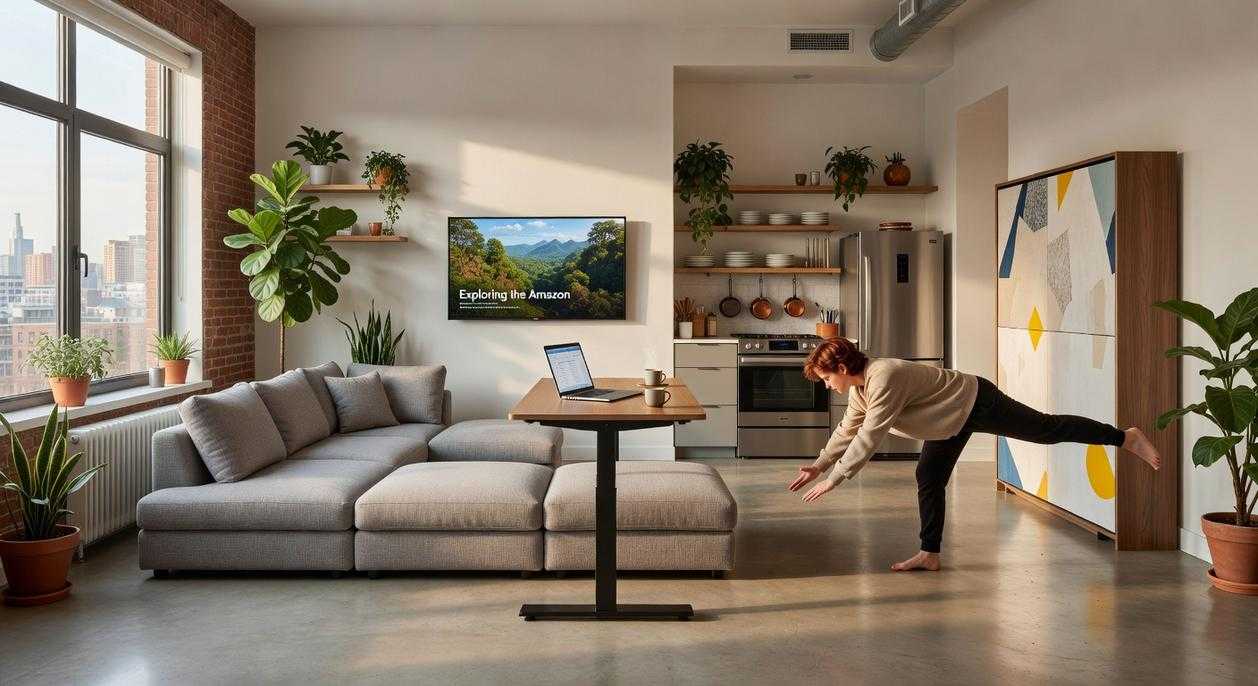
Technology works best when you barely notice it (like good background music at a dinner party). In multifunctional living spaces, smart integration lets one room shift roles without dragging furniture—or cords—around.
Start with automated lighting scenes. Most smart bulbs or switches pair with an app where you can create presets. Step-by-step: (1) Install compatible bulbs or dimmers, (2) group them by room, (3) set brightness and color temperature for tasks like “Work” or “Relax,” and (4) save the scene. Studies show cooler light boosts alertness, while warmer tones encourage relaxation (Harvard Health Publishing). That’s science doing interior design.
For entertainment, consider a short-throw projector mounted near the wall. Add a recessed, motorized screen that disappears into the ceiling. You’ll reclaim floor space and avoid the visual weight of a media console. Pro tip: measure throw distance carefully before buying—manufacturers provide calculators for this.
Hide the mess with pop-up outlets in tables and in-wall speakers. Wireless where possible, but remember: “wireless” still needs power (the irony).
Finally, unify everything with a smart hub. Create a “Good Morning” routine: blinds up, lights brighten, playlist on. One command, total transformation. It’s practical magic—minus the wand.
Creating Zones: How to Define Space Without Partitions
Open layouts feel freeing—until everything blurs together. The fix isn’t building walls; it’s creating intentional zones. In multifunctional living spaces, definition equals calm (and fewer “why is the laptop on the dining table?” moments).
Start from the Ground Up
Anchor each area with a rug sized to fit the furniture, not float beneath it. A plush rug under the sofa signals “lounge,” while a flatweave under a table defines “dining.” Interior designers often use rugs to visually group furniture because our brains read texture shifts as boundaries (Journal of Environmental Psychology, 2010).
Add an open-backed bookshelf to divide without darkening the room. You’ll gain storage and subtle separation in one move. Keep shelves airy—think 60% filled—to maintain light flow.
Finally, layer lighting. A pendant over the table and a focused floor lamp by a chair create psychological cues for purpose.
If you’re unsure which aesthetic direction supports your layout, explore minimalism vs maximalism which home trend fits your lifestyle for clarity.
Pro tip: Choose one consistent color per zone to reinforce identity without clutter.
A Smarter Way to Live
You no longer need to feel constrained by your floor plan. I learned that the hard way. At first, I crammed more furniture into my living room, thinking more storage would solve everything. Instead, the space felt smaller and more chaotic.
However, once I embraced multifunctional living spaces, everything shifted. By combining fluid design principles with smart furniture, subtle zoning, and integrated tech, the room finally worked with my day, not against it.
The lesson? Start small. Identify one missing function and test one change this week. Then adjust intentionally. Progress beats perfection every time.
Single-purpose rooms are fading fast. Today’s living area doubles as office, gym, cinema, and gathering spot. The rise of remote work and smaller apartments makes multifunctional living spaces a necessity, not a luxury. The challenge? Flexibility without clutter.
Start with transformative furniture: a wall bed with integrated shelving, lift-top coffee tables with hidden storage, and modular sofas that reconfigure in minutes. These features save square footage while preserving style.
Add intelligent tech—smart lighting zones, voice-controlled blinds, and compact projectors—to shift moods instantly. Design for adaptability, not excess. When every piece earns its place, your room works harder—and looks calmer daily.
Design a Smarter, More Adaptable Home Today
You came here looking for practical ways to blend style, innovation, and smart functionality into your home. Now you have a clearer path forward — from integrating intuitive automation to rethinking layouts that support multifunctional living spaces without sacrificing comfort or aesthetics.
Modern living comes with a real challenge: limited space, rising costs, and the constant demand for convenience. A home that doesn’t adapt can quickly feel cluttered, inefficient, and outdated. By embracing smart design choices and technology-enhanced solutions, you’re not just decorating — you’re future-proofing your lifestyle.
The next step is simple: start small but start smart. Evaluate one room that could work harder for you. Upgrade it with intelligent lighting, modular furniture, or connected devices that streamline your daily routine.
If you’re ready to eliminate wasted space and finally create a home that works as hard as you do, explore our expert-backed smart living insights and practical automation guides today. Join thousands of forward-thinking homeowners who are already transforming their spaces — and make your home smarter, more flexible, and beautifully efficient now.