
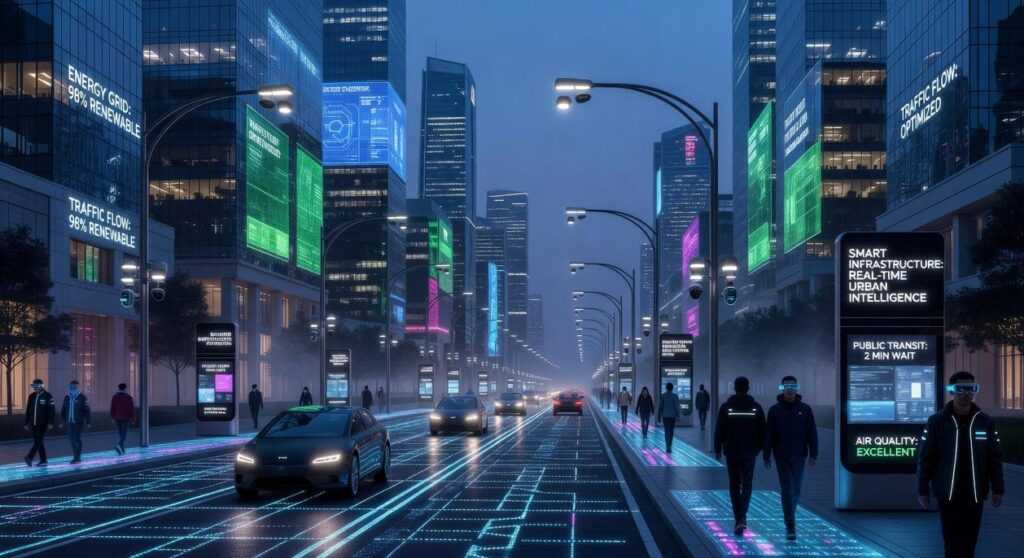
What does a smart city actually look like at street level? Beyond the buzzwords and futuristic headlines, real innovation is happening right in our neighborhoods. This article explores how smart neighborhood technology is improving everyday life through practical solutions that enhance safety, convenience, and community connection. From intelligent lighting and energy-efficient systems to connected public spaces, these advancements are making urban areas more responsive and livable. Built on years of studying how technology integrates into personal living spaces, this guide breaks down proven tools that are transforming communities into more efficient, sustainable, and enjoyable places to call home.
Beyond Broadband: Weaving a Digital Community Fabric
As we look towards the future of smart neighborhoods and connected communities, it’s essential to consider how sustainable practices, such as those outlined in our article on Livpristclean Home Guidance By Livingpristine, will play a crucial role in enhancing the quality of life and environmental harmony within these evolving landscapes.
High-speed internet is only the starting point. What truly transforms a neighborhood is hyper-local connectivity—community-wide mesh Wi-Fi networks, meaning decentralized networks where each node (or access point) relays data for the others. In practice, this setup can blanket apartment blocks or entire streets with reliable access, helping bridge the digital divide. Critics argue broadband providers alone should handle access. However, municipal mesh systems have proven effective in cities like Barcelona, where community networks expanded affordable coverage (European Commission, 2022). So what’s next? Expect more neighborhoods to treat connectivity like a shared utility, not a luxury.
Equally important are centralized information hubs. Neighborhood-specific apps and digital kiosks function as real-time bulletin boards for safety alerts, transit updates, and local events. Think of them as a modern town square (minus the paper flyers flapping in the wind). As smart neighborhood technology evolves, residents may soon receive hyper-personalized updates tied to their street, not just their zip code.
Then there are resource-sharing platforms—digital tool libraries, shared mobility apps, and skill exchanges. These systems lower costs and build trust. If you’re exploring connected living at home, start with what is a smart home a beginners guide to connected living. Pro tip: pilot small community tech projects before scaling—they’re easier to refine and far more likely to succeed.
Intelligent Infrastructure for Safer, Cleaner Streets

Adaptive Street Lighting
“Why is this street brighter tonight?” a resident once asked during a city pilot program. The engineer smiled: “Because more people are walking through it.”
Adaptive LED streetlights use motion and traffic sensors to adjust brightness in real time. When pedestrian or vehicle activity increases, illumination rises; when streets empty, lights dim to conserve energy. The U.S. Department of Energy notes that LED systems alone can reduce energy use by up to 50–70% compared to traditional lighting (energy.gov). Add adaptive controls, and the savings climb even higher.
Adaptive lighting means fixtures respond dynamically rather than operating at a fixed output (think less “always-on spotlight,” more “thoughtful stage manager”). The result: better visibility, lower emissions, and safer late-night commutes.
Automated Waste Management
Overflowing bins are more than unpleasant—they attract pests and inflate collection costs. “We used to drive fixed routes whether bins were full or not,” a sanitation supervisor explained. “Now the bins tell us when they’re ready.”
Sensor-equipped containers send fill-level alerts to collection teams, enabling optimized routes. This reduces fuel use, labor hours, and unnecessary trips. According to the World Bank, smarter routing systems can significantly cut operational inefficiencies in urban waste services (worldbank.org).
It’s a simple shift: data replaces guesswork.
Environmental Monitoring
Discreet air and noise sensors quietly gather data on pollution, decibel levels, and urban heat islands—areas significantly warmer than surrounding zones due to dense infrastructure. “The heat map changed how we plant trees,” one urban planner shared.
This kind of smart neighborhood technology turns invisible problems into measurable insights, guiding public health policies and greener design choices (because you can’t fix what you can’t see).
Tech-Enhanced Public Spaces and Green Living
Cities are rethinking parks and plazas as multi-functional community hubs—places where nature and technology work together, not compete. If you’ve ever searched for an outlet under a park bench, you’ll appreciate the rise of solar-powered charging stations and free public Wi-Fi. These upgrades make it easier to work remotely, host outdoor classes, or simply stream music during a picnic (because silence is rarely anyone’s playlist). Interactive digital art installations go a step further, using motion sensors and LED panels to respond to movement, turning a casual stroll into an immersive experience.
Urban agriculture is also getting smarter. Rooftop gardens now integrate vertical farming—a method of growing crops in stacked layers to maximize space—and hydroponics, which replaces soil with nutrient-rich water. The result? Higher yields in smaller areas and fewer “food miles” (the distance food travels from farm to plate). This improves local food security and reduces emissions. Community centers and apartment rooftops increasingly rely on smart neighborhood technology to monitor crop health and automate lighting.
Water conservation is another major win. Intelligent irrigation systems use:
- Real-time weather forecasts
- Soil moisture sensors
- Automated drip controls
These systems water only when necessary, cutting usage by up to 30–50% according to the EPA. That means greener lawns without waste. If you’re managing a shared garden or HOA space, upgrading to sensor-based irrigation is one of the most cost-effective sustainability moves you can make.
Urban mobility sounds exciting until you’re stuck in traffic, watching your ETA double. Meanwhile, you juggle three apps to plan one trip.
Integrated Transit Solutions
Thankfully, single-platform tools now merge public transit schedules, bike-sharing inventory, and ride-hailing options into one view, creating multi-modal journeys. Instead of guessing, you compare routes in seconds and move on. Still, skeptics argue people prefer their standalone apps. Fair, but convenience wins.
Smart Parking Systems
And then there’s parking. Circling blocks wastes fuel and patience. Real-time data guiding drivers to spots cuts congestion and stress. Paired with smart neighborhood technology, cities feel responsive.
Building Tomorrow’s Communities, Today
You set out to understand how technology is reshaping the places we live—and now you’ve seen how connectivity, infrastructure, and mobility are actively improving everyday community life. The real power of smart neighborhood technology isn’t flashy gadgets; it’s creating safer streets, cleaner energy use, and more responsive, human-centered spaces that solve real frustrations like traffic congestion, inefficiency, and disconnected services.
Better cities don’t happen by accident—they start block by block. If you’re tired of outdated systems holding your community back, speak up. Connect with local planners, attend town halls, and advocate for people-first innovation that makes daily living simpler, smarter, and more sustainable.
 Laurena Nealight is the kind of writer who genuinely cannot publish something without checking it twice. Maybe three times. They came to home trends daily through years of hands-on work rather than theory, which means the things they writes about — Home Trends Daily, Smart Living Concepts, Practical Home Automation Tips, among other areas — are things they has actually tested, questioned, and revised opinions on more than once.
That shows in the work. Laurena's pieces tend to go a level deeper than most. Not in a way that becomes unreadable, but in a way that makes you realize you'd been missing something important. They has a habit of finding the detail that everybody else glosses over and making it the center of the story — which sounds simple, but takes a rare combination of curiosity and patience to pull off consistently. The writing never feels rushed. It feels like someone who sat with the subject long enough to actually understand it.
Outside of specific topics, what Laurena cares about most is whether the reader walks away with something useful. Not impressed. Not entertained. Useful. That's a harder bar to clear than it sounds, and they clears it more often than not — which is why readers tend to remember Laurena's articles long after they've forgotten the headline.
Laurena Nealight is the kind of writer who genuinely cannot publish something without checking it twice. Maybe three times. They came to home trends daily through years of hands-on work rather than theory, which means the things they writes about — Home Trends Daily, Smart Living Concepts, Practical Home Automation Tips, among other areas — are things they has actually tested, questioned, and revised opinions on more than once.
That shows in the work. Laurena's pieces tend to go a level deeper than most. Not in a way that becomes unreadable, but in a way that makes you realize you'd been missing something important. They has a habit of finding the detail that everybody else glosses over and making it the center of the story — which sounds simple, but takes a rare combination of curiosity and patience to pull off consistently. The writing never feels rushed. It feels like someone who sat with the subject long enough to actually understand it.
Outside of specific topics, what Laurena cares about most is whether the reader walks away with something useful. Not impressed. Not entertained. Useful. That's a harder bar to clear than it sounds, and they clears it more often than not — which is why readers tend to remember Laurena's articles long after they've forgotten the headline.