
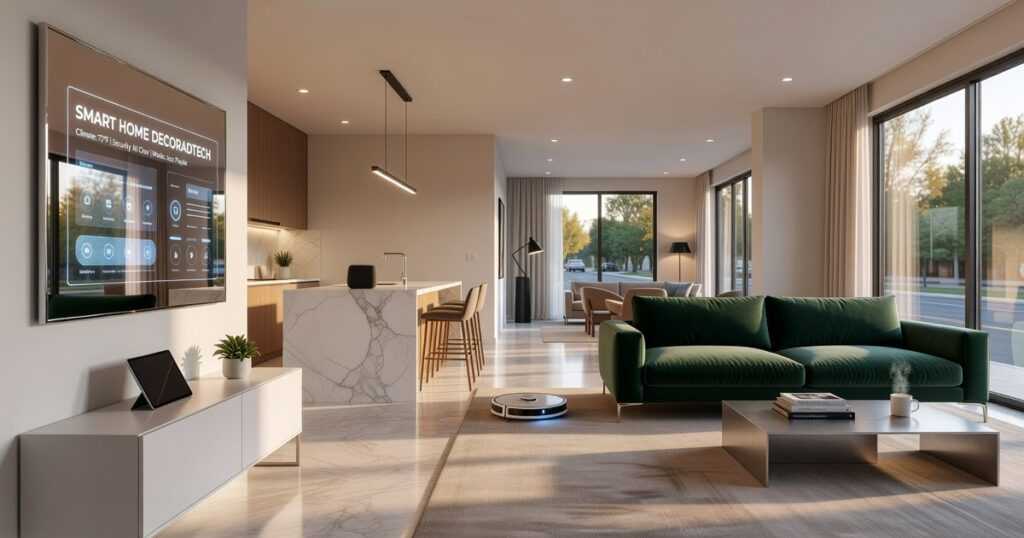
I never thought I’d care about how my thermostat looked until I mounted one on my living room wall.
You want a smart home but you don’t want it to look like a tech showroom. I understand. Most smart devices feel like they were designed by engineers who never stepped foot in a beautifully decorated space.
Here’s the thing: you shouldn’t have to choose between technology that works and a home that feels like yours.
I’ve spent years figuring out how to bring these two worlds together. Not by hiding the tech or compromising on style. By finding solutions that actually belong in your space.
This guide shows you how to build an intelligent home without sacrificing what makes your place feel good. We’re talking about products that work hard but look natural in your rooms.
At Decorad Tech, we test smart products through a design lens first. We only recommend things that pass both the function test and the aesthetic test.
You’ll learn which smart products blend into your decor instead of fighting it. And how to set them up so your home feels more intentional, not more cluttered.
No visible wires. No bulky hubs sitting on your console table. Just a home that responds to you while still looking like you.
The Foundation: Smart Hubs That Blend In
I’ll be honest with you.
Most smart hubs look terrible.
There. I said it.
You spend thousands making your home look good, then you plop a glowing plastic cylinder on your kitchen counter. It screams “tech bro” louder than a Tesla with vanity plates.
Some designers say the solution is to hide your hub completely. Stick it in a closet or behind furniture where no one can see it.
But here’s the problem with that approach.
Hidden hubs don’t work as well. Voice recognition suffers. You end up yelling at your closet like you’re arguing with it. (Trust me, your neighbors will notice.)
The better move? Choose a hub that actually fits your space.
Google Nest and Amazon Echo now come in fabric finishes and muted colors. They’re not winning design awards, but they don’t look like they fell out of a sci-fi movie either.
Placement matters more than you think.
Instead of centering your hub on a counter, tuck it into a bookshelf. Let it sit among your books and small plants. Or place it on a side table with a lamp and a few decorative objects.
The goal is to make it feel like it belongs there.
Some companies are getting creative. You can find smart speakers built into picture frames now. Wall art panels that handle home smart decoradtech functions while looking like actual art.
A well-placed hub gives you centralized control without the visual noise. It should fade into your space, not dominate it.
Your home should feel like a home first. The tech part comes second.
Intelligent Illumination: Smart Lighting as a Design Element
Most people think smart lighting means screwing in a few colored bulbs and calling it a day.
I’m here to tell you that’s just scratching the surface.
Smart lighting can actually transform how your home looks and feels. But only if you approach it like a design element instead of a tech gadget.
Let me show you what I mean.
Beyond the Smart Bulb
Smart bulbs are fine for getting started. But if you want real control over your space, you need to think bigger.
Smart switches. Dimmers. Fixtures that do the work for you.
This is where lighting stops being a novelty and starts being part of your home’s DNA.
The Invisible Upgrade: Smart Switches
Here’s my first recommendation.
Replace your standard light switches with smart versions.
Why? Because you get to keep the fixtures you already love (that vintage chandelier, those perfect sconces) while gaining full control through your phone or voice commands.
It’s the cleanest upgrade you can make. No one walking into your home will see clunky tech. They’ll just notice how good everything looks and feels.
Plus, you can set automations that actually make sense. Lights off when you leave. Lights on before you get home.
Decorative Lighting Products
Now let’s talk about lighting that doubles as art.
I want you to consider flexible LED light strips. Not the cheap ones that scream “college dorm.” I’m talking about sophisticated accent lighting that sits under cabinets, behind your headboard, or along crown molding.
(The difference between tacky and elegant here is all about placement and color temperature.)
Designer smart lamps work too. A statement pendant light that you can dim from across the room? That’s the kind of smart home decoradtech that impresses without trying too hard.
Pick pieces that would look good even if they weren’t smart. The tech should be a bonus, not the main attraction.
Creating Scenes for Ambiance
This is where it gets fun.
Program lighting scenes that match how you actually live. I recommend starting with three:
Movie Night sets everything to dim and warm. No glare on the TV, just cozy vibes.
Focus Mode brings bright, cool light to your workspace. It keeps you alert without feeling clinical.
Welcome Home turns on your entryway and a few key rooms before you walk in. Coming home to a dark house hits different when you don’t have to fumble for switches.
Some people say this is overkill. That flipping a switch takes two seconds anyway.
But here’s what they don’t get. This isn’t about saving time. It’s about creating the exact atmosphere you want with ZERO effort.
Your lighting should adapt to you, not the other way around.
Start with one room. Get the scenes dialed in. Then expand from there.
Trust me on this one.
Automated Ambiance: Climate, Shades, and Air Quality
Your thermostat shouldn’t look like it time-traveled from 1987.
I see it all the time. People drop thousands on smart home decoradtech but keep that beige box on their wall like it’s a family heirloom.
Here’s what I tell them. Your thermostat is like a watch. It’s functional, sure. But it’s also on display every single day. Why not make it something you actually want to look at?
Modern smart thermostats have changed the game. We’re talking sleek interfaces and materials that feel intentional. Metal finishes. Glass screens. Designs that work with your wall hardware instead of fighting against it.
Think of it this way. Your thermostat is the conductor of your home’s comfort orchestra. It might as well look the part.
Window treatments are where things get interesting.
Automated blinds and shades do something most people don’t expect. They make your windows look cleaner. No cords dangling like forgotten jump ropes. No uneven slats because someone pulled too hard.
Just smooth lines and intentional movement.
You can schedule them to open with sunrise (better than any alarm clock I’ve tried). Or close during peak heat to keep your energy bills from exploding.
Some people say automated window treatments are overkill. That manual blinds work just fine.
But here’s what they’re missing. It’s not just about convenience. It’s about creating a space that responds to you. A home that anticipates instead of waits.
Now let’s talk about air purifiers.
Most look like they belong in a hospital waiting room. White plastic towers that scream “I’m a necessary evil.”
But newer models? They’re rethinking the whole approach.
I’m seeing fabric covers that blend into living rooms. Wood accents that feel warm instead of clinical. Sculptural forms that could pass for modern art (if you squint a little).
Think of these as the difference between wearing orthopedic shoes and wearing comfortable sneakers that actually look good. You get the function without sacrificing style.
The goal isn’t to hide your tech. It’s to choose pieces that earn their place in your space. Things that work hard but look like they belong.
Here’s my shortlist for getting this right:
- Match your thermostat finish to your light switches and outlet covers
- Choose window treatments in neutral tones that complement your walls
- Place air purifiers in corners or near windows where they feel intentional
Your home should breathe easy and look good doing it.
For more ways to blend function with style, check out decoradtech smart home ideas by decorator advice.
Functional Elegance: Integrated Furniture & Hidden Technology
Your living room shouldn’t look like a tech store exploded in it.
I’m talking about the tangle of charging cables on your nightstand. The speaker wires running along your baseboards. The black box of a TV that dominates your wall even when it’s off.
Here’s what most people don’t realize. The best smart home decoradtech doesn’t announce itself.
Think about it. You want the benefits of technology without sacrificing your aesthetic. You want to charge your phone, but you don’t want a mess of cords on every surface.
That’s where integrated furniture comes in.
I’m seeing end tables with wireless charging built right into the surface. You set your phone down and it charges. No plugs, no cables, no clutter.
Bathroom mirrors now display the time and weather while you’re getting ready. Media consoles are designed with proper airflow and hidden cable management so your equipment stays cool and your cords stay invisible.
The real win? Your space looks cleaner and functions better at the same time.
Now let’s talk about making technology disappear completely.
Samsung’s The Frame TV displays art when you’re not watching. Your wall looks like a gallery instead of an electronics showroom. In-wall and in-ceiling speakers give you incredible sound without a single visible speaker cluttering your shelves.
And those cables you can’t hide in furniture? Cable management boxes and raceways painted to match your walls make them vanish.
You get all the convenience. None of the visual noise.
Your Home, Smarter and More Stylish
You now know how to pick home tech that works with your decor instead of against it.
Creating a smart home decoradtech space doesn’t mean choosing between style and function. You can have both.
The key is selecting products that blend in naturally. Focus on pieces that feel like they belong in your space.
When technology disappears into your design, that’s when the magic happens. Your home becomes responsive and beautiful at the same time.
Start small. Pick one room or one system like lighting.
Watch how the right tech changes your daily routine. You’ll notice the difference immediately (and so will your guests).
Build a home that reflects who you are. Let technology support that vision instead of defining it.
Your space should work for you in every way that matters. Homepage. Home Smart Decoradtech.